Presentation by Rt Hon Sir Sam Onuigbo
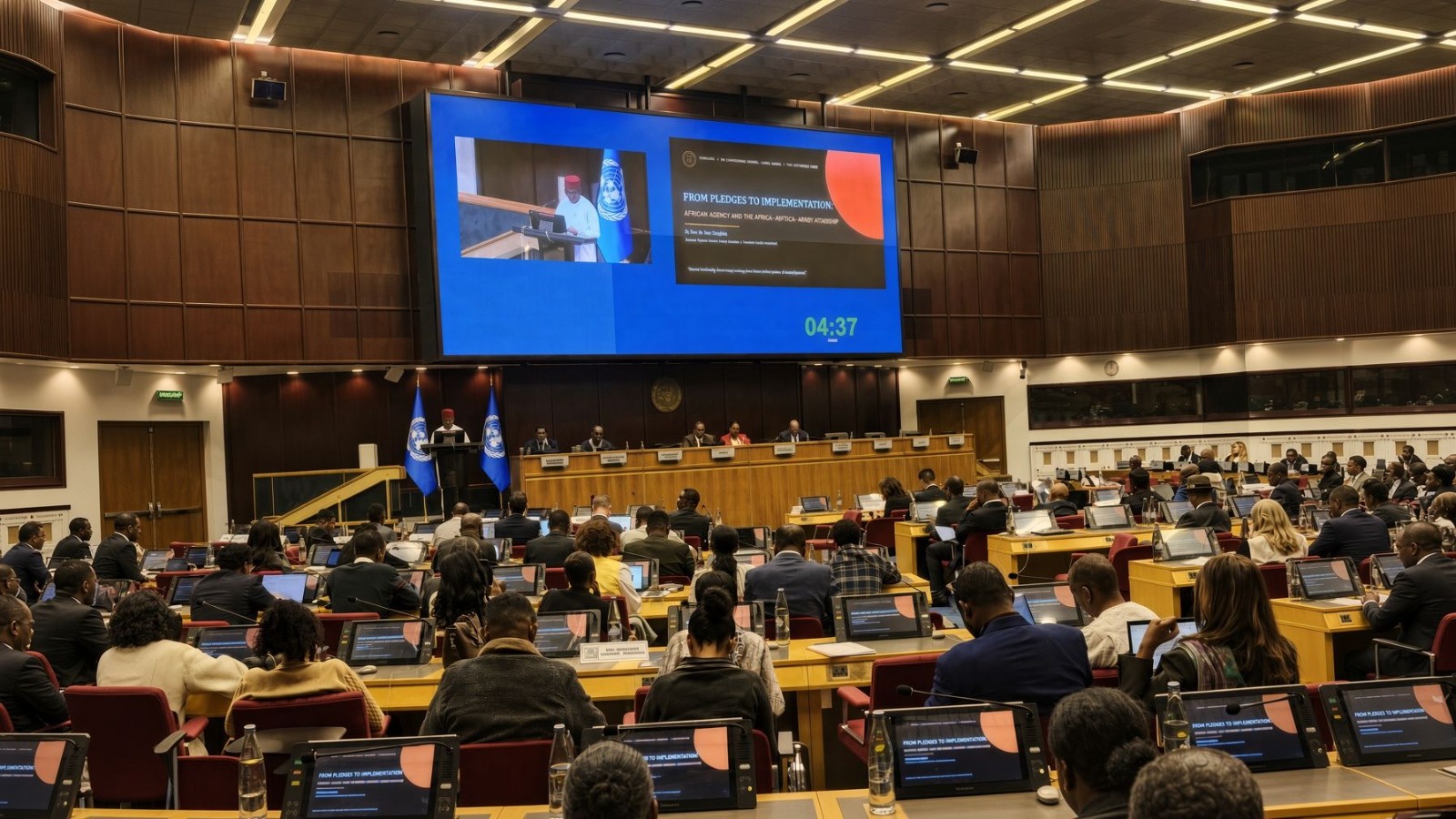
Fourteenth Conference on Climate Change and Development in Africa (CCDA-XIV), United Nations Conference Center, Addis Ababa, Ethiopia, 7–9 September 2026
“Mr. Chairman, Africa has come of age … The fortunes of Africa are in our hands to make or mar.” — General Murtala Muhammed, Addis Ababa, 11 January 1976, at the Extraordinary Summit of the Organization of African Unity.”
Fifty years on, that charge is the argument of this presentation, not its ornament. Africa’s climate future will not be granted by pledges made elsewhere, nor rescued by interventions we wait for. It will be built, financed, governed and defended by Africans, on terms Africa itself has written. Whenever the continent has waited for outside validation, progress has been slow and conditional. Where it has moved first — in advancing independence for African countries, in markets, in institutions, in the very map by which the world sees us — it has changed outcomes.
APPRECIATION
Let me begin by expressing my sincere appreciation for the privilege of being invited to the Fourteenth Conference on Climate Change and Development in Africa, CCDA-XIV. It is an honour to participate in this all-important continental conversation at a time when Africa’s climate and developmental choices are becoming increasingly consequential.
I also wish to recognise the ClimDev-Africa Programme and the institutions providing the leadership and partnership behind this conference — the African Union Commission, the United Nations Economic Commission for Africa, the African Development Bank, the Pan-African Climate Justice Alliance (PACJA), and Afreximbank — for creating this platform for dialogue, reflection and collective action.
BACKGROUND
No other continent holds a greater promise for the sustenance of life than Africa. As such, the twin concepts of conservation and protection have become central to what becomes of the global environment in the years to come.
I am glad that the theme of this Fourteenth Conference, “From Pledges to Implementation: The Belem–Antalya–Addis Roadmap,” speaks to a fundamental challenge facing Africa and the global climate regime and captures perhaps the most important transition in contemporary climate conversations: how do we move beyond commitments and negotiations to build the laws, institutions, financing mechanisms and practical solutions capable of delivering results?
I come to this conversation from a legislative perspective, as the sponsor of Nigeria’s Climate Change Act 2021, and the President of GLOBE Legislators with the conviction that climate ambition must ultimately be translated into effective governance, institutional action and measurable development outcomes.
It is from this perspective, and in direct continuation of the African Leaders’ Addis Ababa Declaration on Climate Change and Call to Action — adopted at the Second Africa Climate Summit in this same city a year ago, on the premise that Africa is “not here to beg” but here with solutions — that I wish to reflect on how Africa can strengthen its agency in shaping global climate governance: not only by advancing its priorities, but by contributing ideas, institutions and practical solutions that move the Africa agenda from pledges to implementation.
For more than three decades, international climate diplomacy has strengthened the language of ambition — conventions adopted, agreements negotiated, NDCs submitted, net-zero commitments announced. The central question before Africa today is different: it is no longer whether governments recognise the climate crisis, but whether the institutions, financing, technologies and political will needed to implement those commitments actually exist — and who controls them.
Africa’s climate challenge is no longer only a question of vulnerability. It is now a question of agency. For decades, Africa has rightly insisted that the continent has contributed the least to historical greenhouse-gas emissions while suffering some of the most severe climate impacts. That argument remains valid and must continue to shape demands for climate justice, finance, technology transfer, adaptation support, and loss and damage. But the moment before Africa now requires something more: a shift from presenting climate priorities to exercising climate agency.
Climate priorities describe what Africa needs. Climate agency defines what Africa decides, designs, builds, finances, governs, and defends for itself. It means Africa must not only attend global climate negotiations or be represented in their outcomes; it must help author the rules, institutions, financing mechanisms, and implementation pathways that determine the future of climate action.
This distinction matters. Participation means Africa is present at the table. Representation means Africa’s interests are counted in declarations, boards, communiqués, and negotiating texts.
Agency is different. Agency means Africa sets terms rather than merely responding to terms set elsewhere. It means designing instruments rather than qualifying for instruments designed by others. It means deciding who assesses, who approves, who disburses, and who benefits. A continent can be well represented in a system it does not shape. Climate leadership means moving from being consulted to being the author.
The theme “From Pledges to Implementation” is therefore central to Africa’s leadership. International climate diplomacy has produced many commitments: conventions, agreements, Nationally Determined Contributions, net-zero targets, finance pledges, and adaptation frameworks. But Africa’s urgent question is not whether commitments exist. The question is whether the institutions, finance, laws, technologies, projects, and political will needed to implement them are in place — and who controls them.
For Africa, implementation cannot be treated as a technical follow-up to negotiation. It is a development strategy. Climate action on the continent must deliver resilience, energy access, industrialisation, jobs, technology, investment, food security, and sustainable development. Africa must continue to demand equitable international finance, but it cannot make its development future dependent on external pledges whose delivery remains uncertain, delayed, or dominated by non-African intermediaries.
The continent’s climate reality makes this shift urgent. Climate change in Africa interacts with poverty, infrastructure deficits, rain-fed agriculture, rapid urbanisation, energy poverty, weak social protection, and constrained access to capital.
Africa’s Nationally Determined Contributions should no longer be treated merely as diplomatic submissions. They must become implementation architectures: investment frameworks, sectoral plans, accountability tools, and pipelines of bankable projects. Each commitment should answer practical questions: what must be delivered, by whom, at what cost, financed how, measured how, and protected how across political transitions. This requires laws, budgets, institutions, oversight, technical capacity, and project-preparation systems.
Nigeria’s Climate Change Act 2021 provides a practical example of this shift from priority to agency. The Act translates climate ambition into law and governance. It establishes a statutory framework for climate action, creates institutional responsibility through the National Council on Climate Change (NCCC), and anchors climate coordination at the highest level of government. By placing the Council under the Presidency and making the President its chair, the Act responds to a common governance problem in Africa: inter-agency rivalry, or “peer jealousy,” where ministries and agencies compete for visibility, budgets, and authority instead of coordinating delivery.
This structure matters because climate policy cuts across every sector. It involves environment, finance, energy, petroleum, transport, agriculture, trade, industry, solid minerals, water, planning, local government, and science. Without a clear coordinating authority, implementation can be weakened by overlapping mandates and institutional competition. Nigeria’s Act shows that climate governance requires not only targets but authority, coordination, accountability, and continuity.
The Act also demonstrates that climate action must survive electoral cycles. Infrastructure, adaptation, energy transition, and industrial transformation require long-term investment horizons. When climate commitments are embedded in legislation, national planning, budgeting, and institutional oversight, they become less vulnerable to changes in administration. This is one of the core meanings of climate agency: Africa must build institutions strong enough to carry climate ambition beyond speeches and conferences.
Nigeria’s experience with floods reinforces this point. The 2012, 2022, and 2024 floods showed that the cost of inaction is not theoretical. Lives were lost, millions were displaced, crops were destroyed, infrastructure was damaged, and economic losses were severe. The lesson is that better disaster response is not enough. Africa must move from reactive disaster management to anticipatory climate-risk management: flood-risk mapping, drainage, dam safety, wetlands protection, land-use planning, early-warning systems, resilient infrastructure, and climate-responsive budgeting. Adaptation should be judged not by projects announced, but by whether vulnerability and losses are actually reduced.
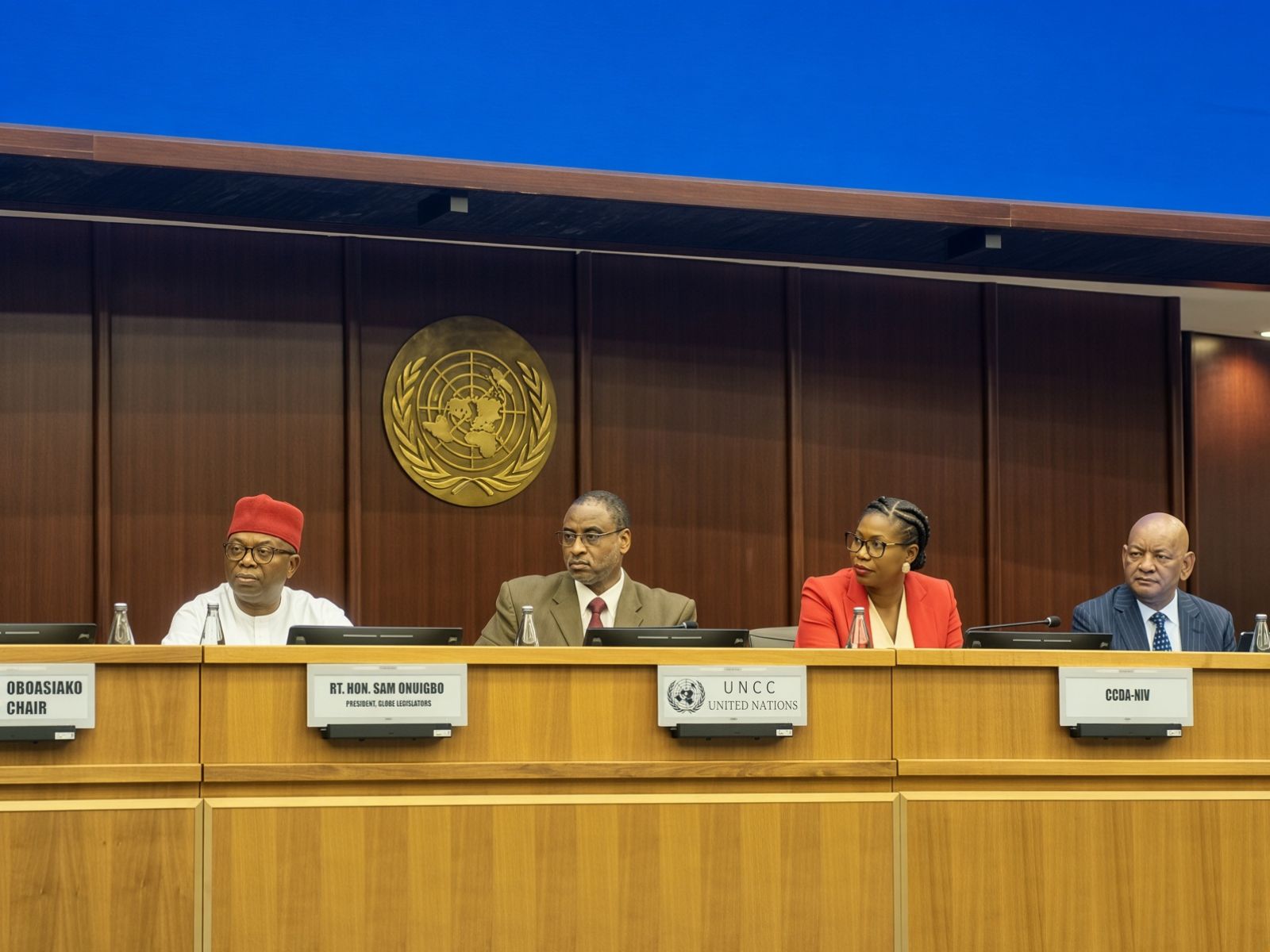
The GLOBE Legislators experience also offers an important example of African climate agency. Legislators are essential because climate commitments become real only when they are translated into laws, budgets, oversight, and accountability. Parliaments approve appropriations, scrutinise executive action, pass climate legislation, domesticate international commitments, and ensure that public institutions deliver on their mandates. Through GLOBE Legislators, parliamentarians can share legislative models, strengthen oversight, support climate-responsive budgeting, and help align national laws with continental and global climate objectives.
This legislative experience shows that Africa’s leadership in global climate governance cannot be left only to negotiators at COP meetings. It must be built year-round through parliaments, regional institutions, ministries, development banks, universities, technical agencies, civil society, private investors, and local governments. Negotiation without implementation capacity produces declarations. Implementation without legislative backing risks fragmentation. Climate agency requires both.
Africa’s leadership should therefore focus on five areas of global climate governance.
First, Africa must shape the accreditation and disbursement rules of multilateral climate funds. Institutions such as the Green Climate Fund, the Adaptation Fund, and the Loss and Damage Fund should not treat African institutions merely as implementers of externally designed solutions. Where African development banks, national climate funds, regional institutions, and technical agencies have the capacity, they should be the first point of access, assessment, and disbursement for resources meant to address African problems.
Second, Africa must shape the future of climate finance beyond headline figures. The debate should not only be about how much money is pledged, but what counts as climate finance, how much is grant-based rather than loan-based, who bears the cost of capital, who controls access, and whether finance reduces Africa’s risk premium. Climate finance that leaves African countries more indebted, or dependent on intermediaries outside the continent, cannot be considered just.
Third, Africa must shape carbon-market rules under Article 6 of the Paris Agreement. Carbon markets can mobilise finance, but only if they support domestic transformation, protect communities, and ensure environmental integrity. Africa should not merely supply cheap credits while value is captured elsewhere. Carbon finance must contribute to African industrialisation, land restoration, community benefit, and long-term development.
Fourth, Africa must shape climate-related trade rules, including carbon-border measures. As major economies introduce climate-linked trade restrictions, African producers may face new competitiveness pressures. Africa must coordinate climate negotiators, trade ministries, and the AfCFTA Secretariat so that global climate rules do not become a new tariff wall against African industrialisation.
Fifth, Africa must shape the metrics of adaptation, loss and damage, and resilience. Adaptation success should not be measured only by externally designed indicators. It should be grounded in African realities: whether farmers are protected, cities are resilient, coastal communities are safer, water systems function, food production is secured, and infrastructure can withstand future climate shocks.
This is where the Belém–Antalya–Addis roadmap should lead: from declarations to delivery, from ambition to institutions, from needs to instruments, and from representation to authorship. Africa should arrive at global climate forums with projects and investment propositions, not only demands. These should include an African Climate Implementation Compact, a project-preparation facility, a continental adaptation investment pipeline, a climate intelligence network, a green industrialisation compact, an energy-access and transition compact, a fair climate-trade framework, and a blue economy investment initiative.
Africa’s agency also requires mobilising African capital. International obligations remain important, but Africa must use its own public resources more strategically to crowd in pension funds, sovereign wealth funds, commercial banks, development-finance institutions, and private investors. Public and concessional finance should reduce risk so that larger pools of African and international capital can follow. At the same time, adaptation projects that produce public benefits but limited commercial returns must remain anchored in public and concessional finance.
Energy transition is another test of agency. In a continent where hundreds of millions still lack reliable electricity, a just transition must mean more than emissions reduction. It must mean access, affordability, reliability, industrial opportunity, clean cooking, productive power, and jobs. Africa’s renewable energy, natural gas transition resources, critical minerals, agricultural potential, forests, oceans, and young population must be converted into value chains, not exported as raw materials while finished green technologies are imported back.
Ultimately, Africa’s climate leadership in global governance would mean this: Africa defines its own development-compatible climate pathway; builds institutions to implement it; uses law and legislative oversight to sustain it; mobilises its own capital alongside fair international finance; shapes global rules before they are finalised; and insists that climate action produce measurable outcomes for African people.
The real test of climate ambition is not the quality of the pledge, but the quality of implementation. Success will not be measured only by declarations adopted, but by whether a farmer is better protected from drought and flooding, a community has reliable energy, a young African can build a green enterprise, women have access to finance and land, cities are resilient, industries can compete, and Africa’s natural resources create African value.
Africa is vulnerable to climate change, but Africa is also valuable. It has the people, resources, institutions, markets, ecosystems, minerals, renewable-energy potential, and maritime geography needed to become a major contributor to global climate solutions. Climate agency means transforming those assets into resilience, prosperity, and strategic influence.
In practical terms, Nigeria’s Climate Change Act 2021 shows how climate priorities can become institutions, coordination, law, and accountability. The GLOBE Legislators experience shows how parliaments can turn climate commitments into budgets, oversight, and durable governance. Together, they demonstrate the central lesson for Africa: climate leadership is not simply asking for a better global system. It is building one — with African institutions, African decisions, African capital, and African authority at the centre.
KEY MESSAGES AND TAKEAWAYS
- Africa that is home to critical minerals and is surrounded by oceans and seas, must move from climate participation to climate agency by setting the tone and shaping the rules, institutions, agencies, finance, and implementation pathways that affect its future.
- Implementation is now the real test of climate ambition — pledges must become laws, budgets, projects, accountable institutions/agencies, and measurable outcomes for African people.
- Africa’s climate leadership must be built through African institutions and agencies, capital, and authority — with fair international finance supporting, not controlling, the continent’s development pathway.